top of page

Become a Member of the Friends of the Wildlife Corridor! Join Today!!

Friends of the Wildlife Corridor
Blog & Newsletter Archive

When we talk about conservation, we often focus on land, water, wildlife, and the policies that protect them. But there’s another kind of infrastructure that determines whether environmental work thrives — the social infrastructure that connects the people doing the work.


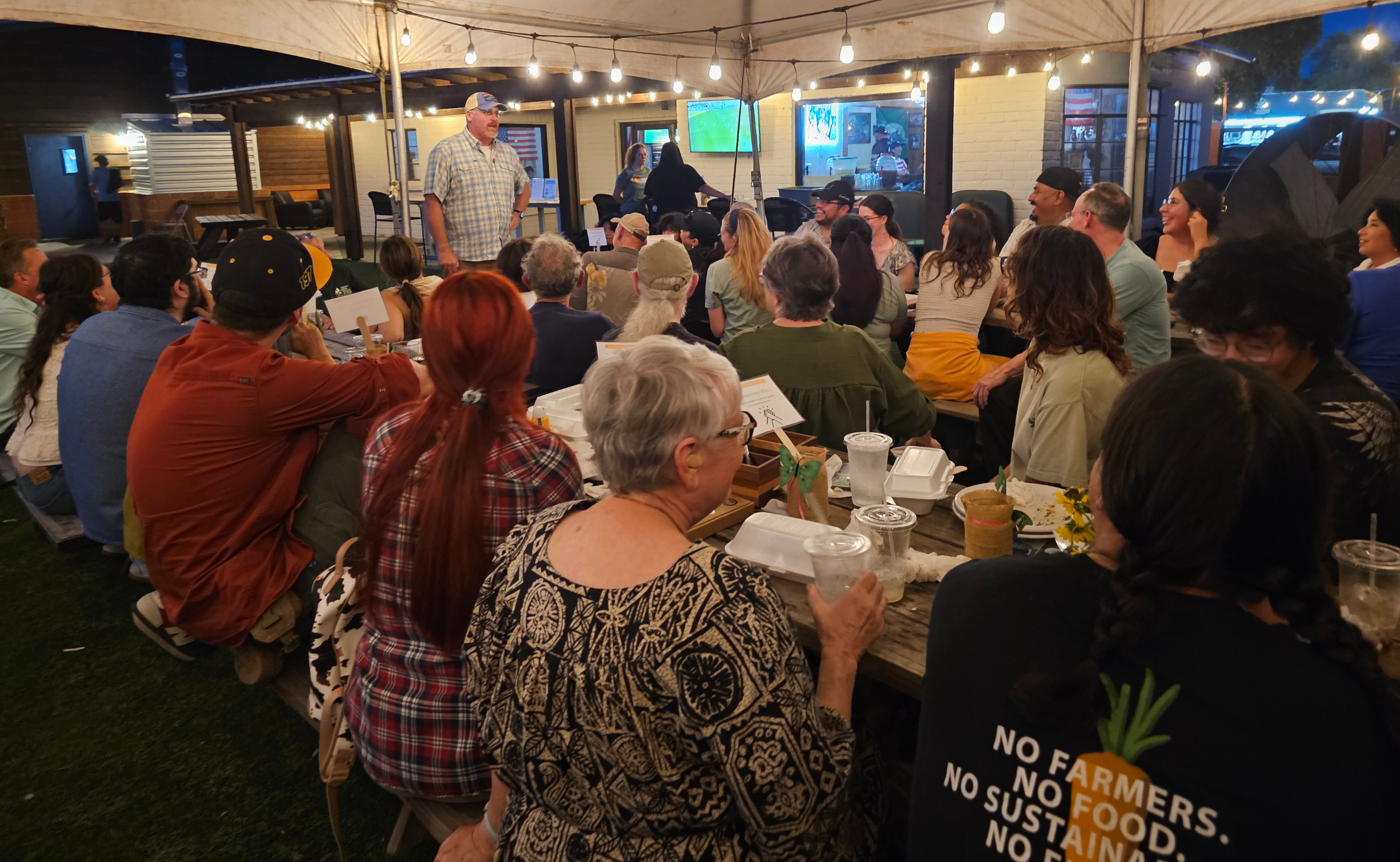
Last night, under the South Texas sky at Uncle Chops in Weslaco, I saw that infrastructure come alive.


Our Summer Nature Social brought together around 40 community members from across the region: nature centers, libraries, museums, state parks, wildlife refuges, volunteer groups, college students, and more. Sponsored by Friends of the Wildlife Corridor, Texas Children in Nature Network, RGV Nature Center Alliance, and the Native Plant Society of Texas–Rio Grande Valley, the event was intentionally simple — good food, open air, and space for conversation. The impact, however, was profound.


People didn’t just show up — they showed up for each other


From the start, the energy was unmistakable. People weren’t simply exchanging names; they were sharing stories, challenges, hopes, and ideas. After dinner, we invited everyone to introduce themselves — not just their role, but what they were passionate about and where they hoped to make connections. The space lit up.


Marisol Vidales, Library Director at the Dr. Hector P. Garcia Memorial Library, spoke with excitement about their Nature Smart Library work and the launch of a new outdoor children’s play space, warmly inviting nature organizations to join the celebration. College students shared their conservation work and their eagerness to learn from those who came before them. Liz Walker, a refuge volunteer, described the joy of connecting visitors to wildlife during her bird walks — and enthusiastically invited everyone to the next one.


There was joy at every turn, even as people acknowledged the challenges facing our region. Several attendees expressed how meaningful it felt simply to be together — to be reminded that they’re part of a larger movement.


Closing out the introductions were two leaders from our State Parks: Roy Rodriguez, Lead Interpreter at Bentsen-RGV State Park, and his superintendent, Tom Forwood. Both spoke about their long history in the field and their deep personal ties to the Rio Grande Valley. Their reflections inspired the group to keep going, keep connecting, and keep contributing to the protection and celebration of this unique place we call home.


Social infrastructure makes collaboration possible


We often assume collaboration happens in meeting rooms or through formal partnerships. But it actually begins in spaces like this — informal, human-centered gatherings where trust is built and ideas surface naturally.


When people feel connected, they share more. When they share more, they collaborate more. And when collaboration grows, conservation accelerates.


That’s social infrastructure.


Conservation needs connection


Environmental work can be heavy. Many of us operate with limited resources, big responsibilities, and the constant pressure of protecting something irreplaceable. But when we gather — when we share space, stories, and purpose — the work feels lighter. More possible. More hopeful.


Last night reminded me that the future of conservation isn’t just about restoring landscapes. It’s about restoring connection.


And that’s work worth investing in.


We’re already planning our next Nature Social for September, likely in Cameron County — another chance to strengthen the network of people who care deeply about the natural world in South Texas. To join us for our next nature social in the RGV, or to discuss ideas on how to put together one in your own community, contact president@friendsofthewildlifecorridor.org or Marisa at moliva@texaschildreninnature.org.
3325 Green Jay Rd., Alamo, TX 78516 (956) 784-7502

Visit us at: www.FriendsoftheWildlifeCorridor.org


Updated: Oct 29, 2025

The Friends of the Wildlife Corridor would like to thank the sponsors of the 2025 Run for the Refuge Event. The event supports conservation efforts at the Santa Ana and Lower Rio Grande National Wildlife Refuges. The event will be held on Saturday, November 1, 2025 at Santa Ana National Wildlife Refuge.


U.S. Customs and Border Protection (CBP) has released a request for public input regarding proposed border wall construction in Hidalgo and Starr Counties, Texas. The project includes approximately 4.7 miles of new wall segments within the Rio Grande Valley Sector, some of which intersect with federally protected refuge lands managed by the U.S. Fish and Wildlife Service (USFWS).


Community members, conservationists, and stakeholders are encouraged to review the official CBP environmental assessment and comment form, which includes an interactive ArcGIS map detailing proposed wall locations. Comments are being accepted through September 26, 2025, and may be submitted via email, phone, or mail.


Key Areas of Concern for Habitat Conservation


Several refuge tracts appear to be directly impacted by the proposed construction:


  • Las Ruinas and Arroyo Ramirez Tracts: These areas were previously walled in 2019. The current map shows small wall segments likely intended to connect earlier construction with newer adjacent sections. At Arroyo Ramirez, a recently built wall on neighboring property suggests a continuation that would complete the barrier across this corridor.

  • Arroyo Morteros Tract: Located upriver from Salineño, this unwalled refuge is marked for a new wall segment that cuts directly across the arroyo. The terrain here includes high, erosion-prone banks that would require significant excavation and grading. Past discussions reportedly considered routing the wall along the northern boundary of the refuge to avoid these sensitive features, but the current map does not reflect that alternative.

  • Floodplain Near Rio Grande City: Additional wall segments are planned in low-lying areas adjacent to neighborhoods and an elementary school. These sections were originally designed in 2012 to redirect floodwaters into the U.S. rather than deflecting them into Mexico. However, the new extensions were not part of the original flood modeling, raising questions about how water will flow through or around these barriers. In one instance, a refuge tract next to a residential area may prevent drainage to the Rio Grande, potentially increasing flood risk for nearby homes.


Why This Matters


The Lower Rio Grande Valley is home to some of the most biologically diverse habitat in North America. Refuge tracts like Arroyo Morteros and Las Ruinas serve as critical corridors for wildlife movement, native plant restoration, and community-based conservation efforts. Construction in these areas may fragment habitat, alter hydrology, and impact long-term ecological resilience.

Friends of the Wildlife Corridor encourages all interested parties to engage with the public input process. Thoughtful, fact-based comments can help inform planning decisions and ensure that conservation values are considered alongside infrastructure goals.


How to Submit a Comment


Comments can be submitted by:

  • Email: RGVComments@cbp.dhs.gov (Subject: “Rio Grande Valley Sector Border Wall Construction”)

  • Phone: (833) 412-2056

  • Mail:


    U.S. Customs and Border Protection

    U.S. Border Patrol Headquarters

    Program Management Office Directorate

    1300 Pennsylvania Ave. 6.5E Mail Stop 1039

    Washington, DC 20229-1100

    ATTN: Miche

    lle Barnes


For more details and to view the interactive map, visit the CBP project page.


bottom of page